HILLS WHEELS AND WATER : BIKERAFTING MEGHALAYA


 / 5
/ 5
There’s a profound dishonesty in working around the clock for the whole year just to afford a day of the week feeling drained. The daily 9 to 5 in the city with the never ending traffic snarls, the relentless sirens and honking, sitting behind the computer and endlessly scrolling on social media becomes a suffocating mantra. While running a bike shop for almost 10 years has been my profession, I have never been keen on multi-day long distance cycling and neither was I well-conditioned enough to pull one off but I was always intrigued by the touring chaps that stopped by the shop every now and then. “It’s not that hard you know, you just have to step out and start” most of them would say.
So the year 2023 was where it all started. I joined a local gym and was introduced to kettlebell sport by a good friend of mine. A few months into training felt great already and it was this time around that I decided to do a small cycling trip around the State through the Southwest and West Khasi hills of Meghalaya.
Totally new to bikepacking, I decided to invite Caldwell Manners, a friend with a lot of knowledge and wisdom about bikepacking and had done multiple trips across the country and abroad. Normal bikepacking seemed little too casual for Caldwell so we decided to make things a little different this time: Bikerafting
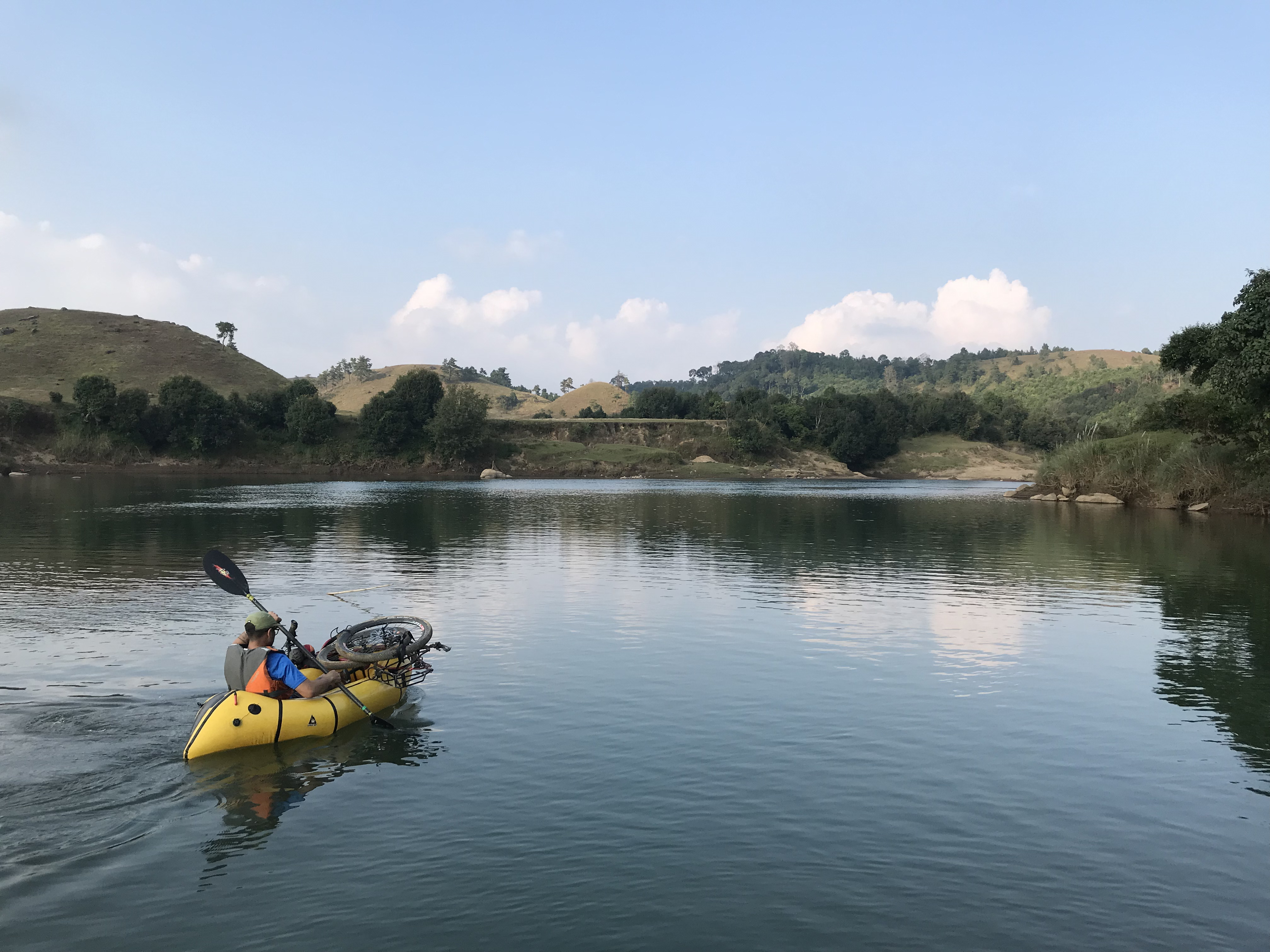
Bikerafting is a fairly niche concept that involves cycling and packrafting. The simplicity of packrafts gives them the advantage of being light and compact enough to be fitted into a bicycle and also durable enough to carry a person on water with a dismantled bicycle on it. It was late October of 2023 when we started planning for the trip. Once we were fixated on the plan, we started scouting for routes.
I was always perpetually drawn to the South West Khasi Hills of Meghalaya because of its scenic landscapes. In all my years of exploring the outdoors, I have spent the majority of my time in this part of the state. The roads from Mawkyrwat towards Wahkaji and beyond have always been my go to.
Wahkaji has been a recurring subject in the news since the early 2000s due to its rich uranium reserves and intense socio-political friction between local communities and the government over the resource extraction.
In the 1980s, the Atomic Minerals Directorate for Exploration and Research (AMD) discovered large deposits of Uranium in parts of Wahkaji and Domiasiat. Pre-mining activities via drilling had been conducted by the Uranium Corporation of India Ltd (UCIL) in the 1990’s. Concerned about the health and environmental effects of Uranium mining, the locals of Domiasiat and Wahkaji have been opposed to the exploration and extraction of Uranium ever since. The community’s sustained opposition to the resource extraction resulted in developmental deprivation. There were no proper roads beyond Rangblang until recently which made it relatively inaccessible, keeping it untouched and preserving its secluded nature, which was exactly what we were looking for.
After some thorough research we were fixated on the route: cycle from Shillong to Rangblang via Mawkyrwat, camp there for the night,the next day bikeraft a stream that merges into the famous Nongkhnum river island and cycle back through the countryside roads of West Khasi Hills.
We were fairly new to the world of rafting but were lucky enough to have Zorba Laloo, a friend and pioneer in the sport who was kind enough to guide us and lend his rafting equipment for the trip: an inflatable raft, detachable paddles, PFD’s and a throwbag were pretty much all that we needed to tackle the waters.
Having the equipment ready is one thing but mounting all of this load on a bicycle is another task. We decided to chuck the tent and carry a tarp instead, that way we could use the bicycle as a central pillar, mount the tarp and sleep on the sides. With all equipments and supplies sorted, it was time to pedal out.
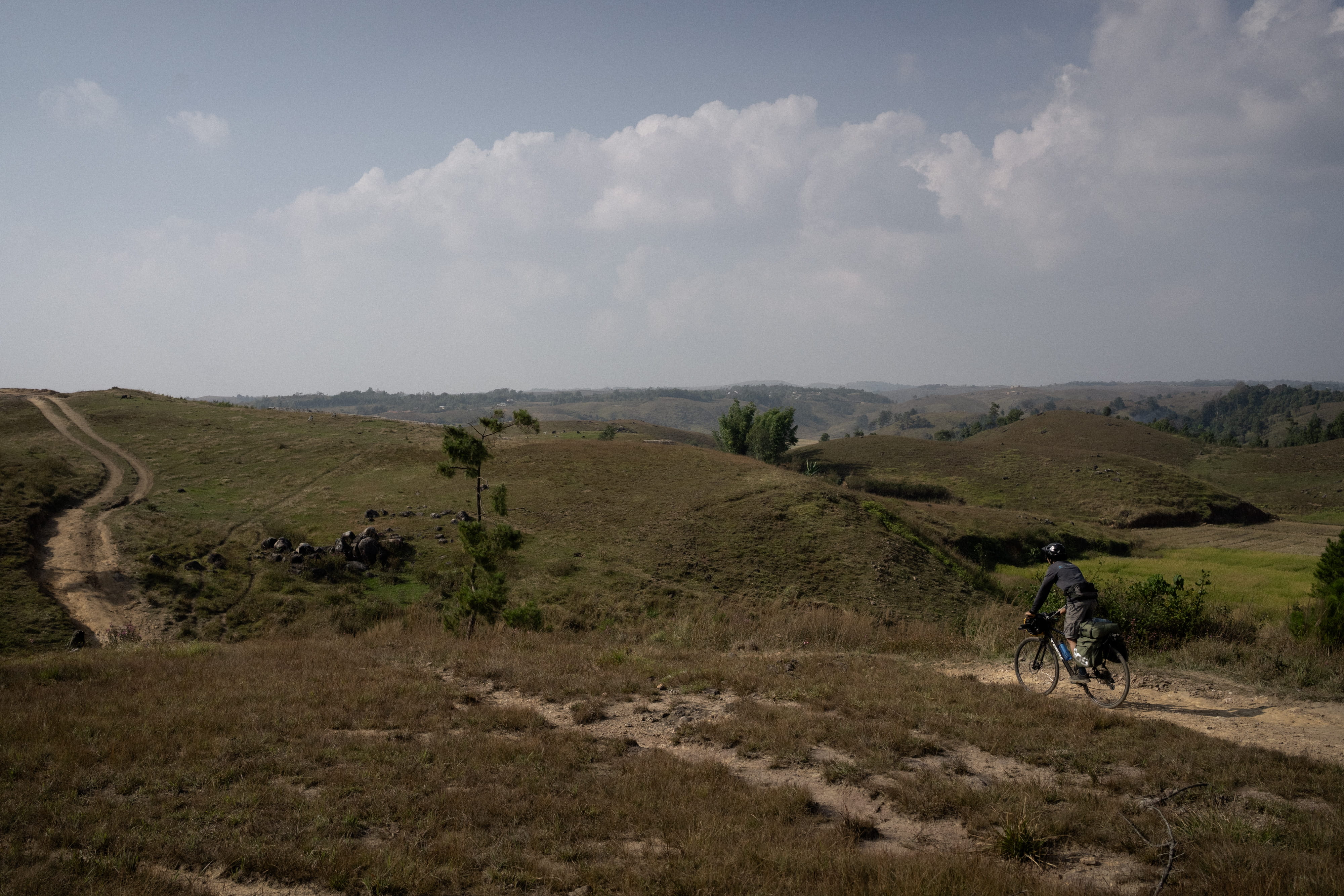
It was a chilly morning on the 4th of November 2023, and I remember struggling to tie the packraft onto the front of my handlebar. The detachable paddles were just as wide as the handlebars of the Trek Hybrid bike that I was using and behind was a crappy old seatpost mounted rack where I tied my saddle bags. We set out at about 8am, started the climb to Upper Shillong and descended into the windy roads to South West Khasi Hills.
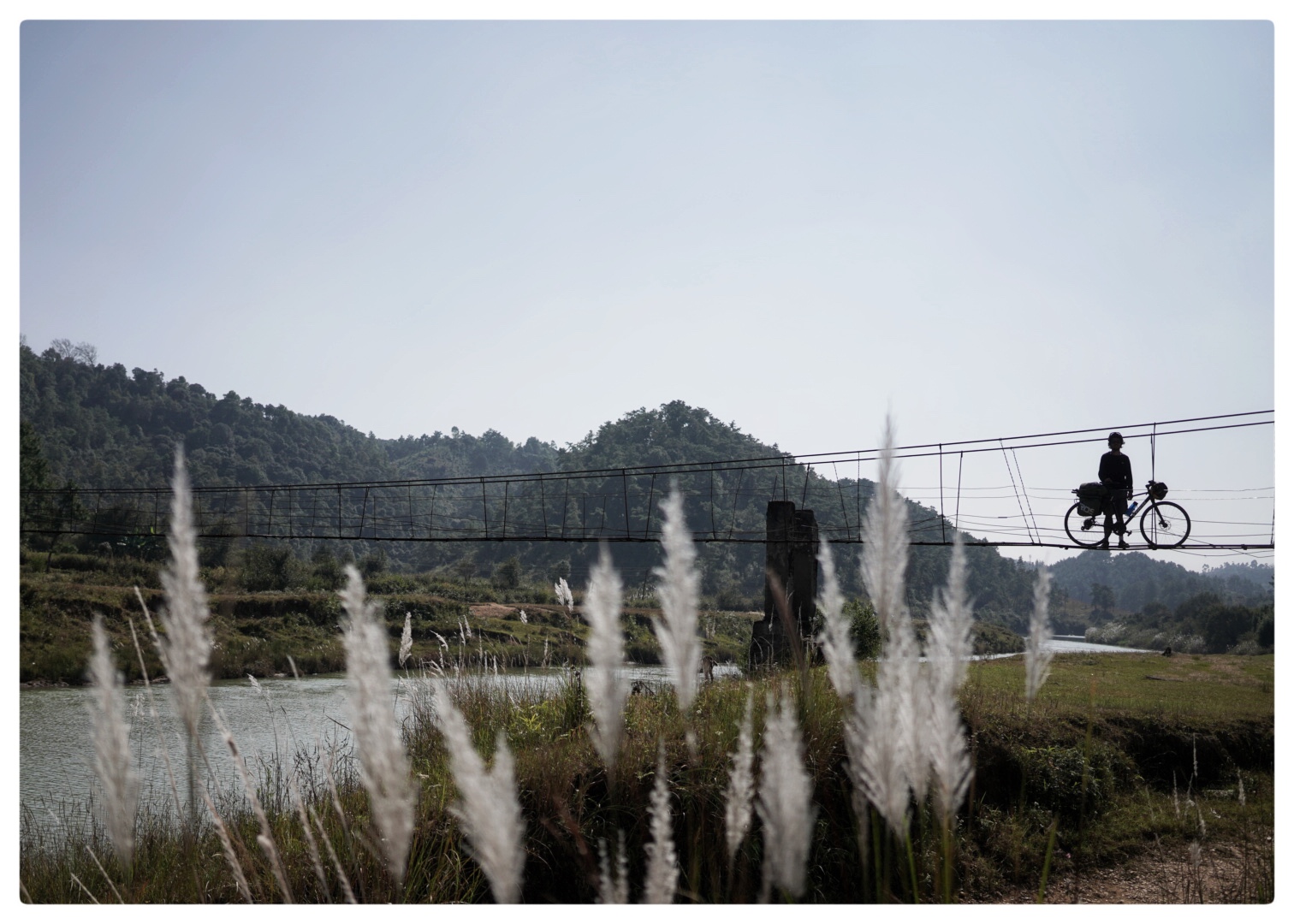
We stopped for lunch in Jakrem Village and the lady at the shop curiously asked, “Where from?” followed by a surprised look when we answered “ngi wan na Shillong Kong” (we came from Shillong). It was about 1pm when we reached Mawkyrwat Village where we bought a few more supplies from the local market. It took us another 3 hours to reach Rangblang Village where we stopped for tea and had to rush so that we could set up camp before it got dark. We decided to camp at Jyrhap bridge which is where the stream leading into Nongkhnum river starts.
We woke up to a soggy morning and started scouting along the banks. Sadly, the water levels were too low in a lot of places, which meant that we’d end up dragging our rafts and bikes or maybe even having to hop over rocks with all that equipment. We sat over breakfast and took a call: bikerafting the stretch seemed like pulling teeth so we had to look for an alternative route. We rechecked our maps and found out a few kilometres ahead of the main road was a series of jeep tracks that somewhat led to the banks opposite to Nongkhnum River island and this somewhat seemed far more feasible.
It was a quiet Sunday morning when we took off on our rigid but sturdy bikes, and all the while, there was this reminiscing clanging sound that was resounding throughout our ride – Caldwell had hung his steel mug onto his rack, a picture so embedded in my memory, I can still hear the clang while I put this narration onto this bit of the journal.
While on the jeep-tracks, we had a score of enthusiastic kids running alongside as we passed through villages. Some of them even followed us all the way to the river and helped us unload our equipment before we started rafting to the other side of the banks. The rough terrain and rerouting took us longer than we expected. We finally reached the banks of the Nongkhnum River at around 3pm. We set up camp and made some Poha for dinner. It was a slow night as we sat around the fire listening to some 90s classic rock songs.
The next day at breakfast, a local who was sand mining along the banks came to us. We had a small conversation and told him about our trip as he was curiously fiddling with the shifters on my bike.
“You must be paid well for this,”
“No,” I said. “Nothing at all.”
He paused. “Then why trouble yourself so much?”
We held each other’s gaze for a moment and I nodded and smiled.
We cycled our way back through Jaidoh-Nongkasen-Pariong-Lawbyrtun-Kynshi-Mairang-Ladmawreng and back to Shillong that day. The sight was a feast for the senses cycling through the winding countryside roads with the Kynshi River sparkling beside us complemented by some incredible authentic local food from the stalls along the route. It was worth noting that the remote stretches offered delicious food that was both cheap and abundant which sadly faded to smaller portions and higher prices as we were nearing the city. I remember it was already starting to get dark as we climbed the infamous Traw road where we made our last refuelling stop with some hot tea and cream buns after which we parted ways back home.
To the confusion of the people we met throughout the trip, who imagine that this voluntary suffering of the endless climbs, sleeping through the freezing nights in a tarp, pushing our bikes through the uneven terrain and the all the surprises that come along are all for a monetary gain, highlights the gulf between their world and ours. While we admire the lush green rolling hills, birds chirping, burbling rivers and the quiet, peaceful nature that they are blessed with, it became evident to me that this admiration isn’t so often a two-way street. What is easily attainable isn’t always appreciated or valued and vice versa.
They cannot comprehend that our greatest gain is simply existential. The reason we do this is to get away from the hurried, artificial life of the city and cycling is the necessary friction that slows everything down. The reward is the profound, unexplainable joy of being at one with nature with a sense of calm in every pedal stroke.